Sulphur Cycle
Detailed exploration of the sulphur cycle and its environmental significance
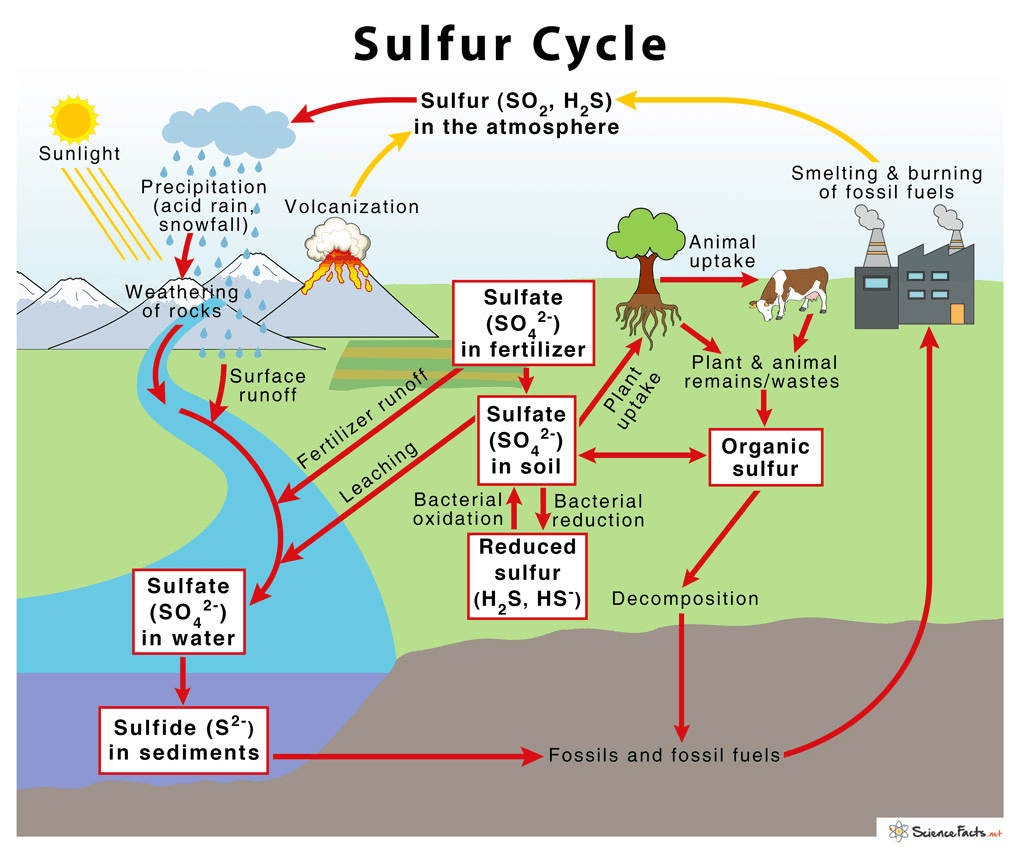
Introduction to the Sulphur Cycle
The sulphur cycle is a biogeochemical cycle that describes the movement of sulphur through the Earth's atmosphere, hydrosphere, lithosphere, and biosphere.
Sulphur is an essential element for all life and is a key component of amino acids and proteins.
Key Processes
Mineralization: Conversion of organic sulphur to inorganic forms
Oxidation: Conversion of sulphide to sulphate
Reduction: Conversion of sulphate to sulphide
Immobilization: Incorporation of inorganic sulphur into organic compounds
Statistical Analysis
Developed regression models to predict sulphur deposition patterns
Analyzed spatial distribution using geostatistical methods
Created time series models for seasonal variation analysis
Presentation Highlights
- Mineralization: Conversion of organic sulphur to inorganic forms
- Oxidation: Conversion of sulphide to sulphate
- Reduction: Conversion of sulphate to sulphide
- Immobilization: Incorporation of inorganic sulphur into organic compounds
- Created time series models for seasonal variation analysis